Cleaning Tips · Windows
Use a rubber squeegee and lint-free microfiber, a weak soap or vinegar solution, and stay out of direct sun. That fixes almost every streak. Here's how our crew does it, Florida hard water and humidity included.
By Joey Maher, Owner, Orchid Cleaning Service, Winter Haven, FL.
Reviewed for quality by Beverly Hughes, Commercial Operations Lead.
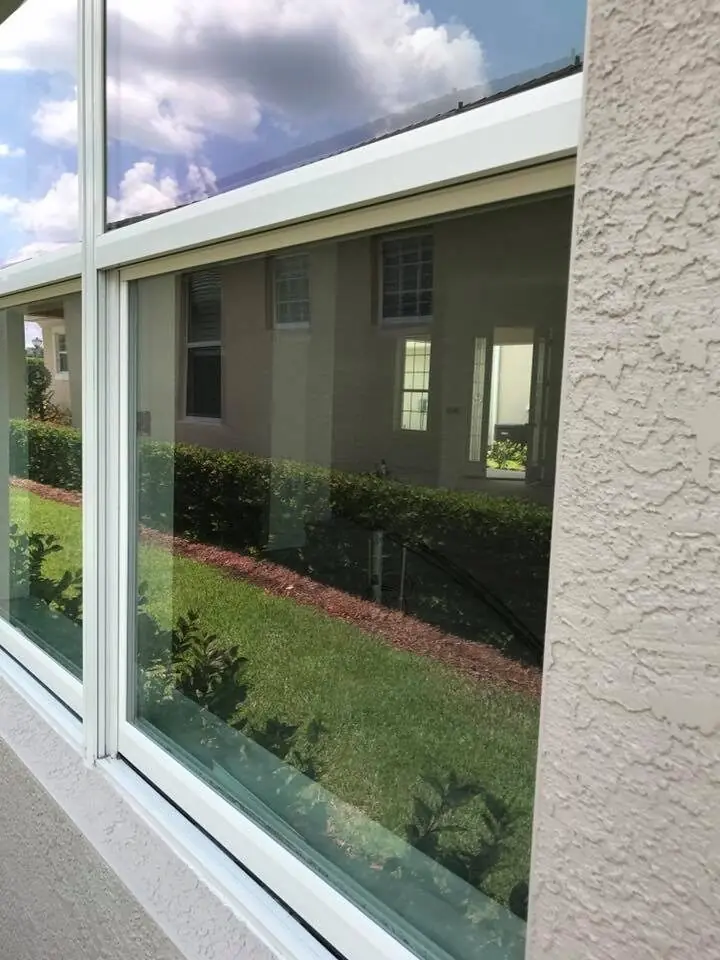
Windows are one of the easiest wins in a deep cleaning visit. Streaks almost always come from one of four things:
Skip paper towels and newspaper. They shed lint and are the most common reason DIY glass looks cloudy in bright sun.
Skip heavy commercial glass sprays. Their polymers and fragrance oils leave the haze people mistake for clean. On tinted glass, use an ammonia-free solution so the film doesn't cloud or lift.
Change the bucket water once it turns cloudy. And check both sides: a streak that looks like it's outside is often on the inside pane.
Never in direct midday sun, which dries the solution before you can squeegee. Early morning or an overcast afternoon is best. On muggy mornings, give the glass an extra minute before the final buff, and check the radar: a summer afternoon storm brings wind-blown grit and rain spots within the hour.
Pollen season (roughly February through April in Central Florida) re-streaks clean glass within days unless you rinse the screens and sills too. The rest of the spring list is in our spring deep cleaning checklist.
Inside windows and ground-floor exteriors are easy DIY. Second-story exteriors, large storefronts and screen enclosures need ladders, water-fed poles and a trained crew. Professional window cleaning is usually bundled into a standard visit rather than priced as a stand-alone add-on; see typical ranges on our house cleaning prices page.
We do inside and multi-story outside window cleaning for homes and commercial properties across Polk County.
Get a free quote →More cleaning tips
→ Spring Deep Cleaning Checklist for Florida Homes
→ Post-Construction Cleaning Checklist for New Builds & Renovations
→ How to Stop Mold & Mildew in a Florida Home
→ How to Deep Clean Your Kitchen Appliances
→ Pressure Washing Guide for Florida Homes & Businesses
→ How to Clean AC Vents and Improve Indoor Air Quality
→ Hurricane Prep & Cleanup Guide for Polk County Homes
→ How We Train and Vet Our Cleaners
→ Back to all cleaning tips